Summary
Flipped learning is an increasingly popular pedagogy in the educational field. While some people regard it as an effective method as it allows for deeper and collaborative learning, others argue that it is a lazy approach with over-reliance on technology and may widen the learning gap.
This blog chooses three articles from different perspectives about flipped classrooms and analyses the comparative statements inside them to comprehensively demonstrate people’s understanding of the flipped model.
Analysis
In traditional classrooms, students are expected to sit through the lecture presentation during in-person meetings. However, flipped classrooms enable students to get access to lectures in advance, which frees up face-to-face time to work through problems in class with the assistance of teachers.
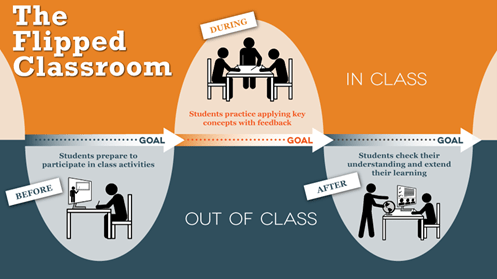
Click to watch the specific definitions
The three selected articles have different attitudes toward it. Roehling and Bredow (2021) emphasize that flipped learning promotes student autonomy, engagement, and critical thinking. They consider flipped classrooms an effective way to encourage active learning and individualized support through in-class activities. Gupta (2024) has critical thinking based on personal experience, arguing that “while the flipped method is beneficial to the learning process, it is also an inefficient way to learn”. However, Patel (2024) strongly criticizes the flipped classroom model, saying that by putting reliance on technology, the value of interaction between teachers and students is killed. It may create more barriers than it solves, particularly for those who need considerable help from the teacher.
It is interesting and obvious that the articles are narrated in different tones and languages, which also have connections to their identities. Both professors of psychology, Roehling and Bredow discuss the topic more academically supportively and objectively. Gupta adopts a critical and personal tone as a free writer. The article is mostly narrated in the first person and includes short words such as “Ridiculous”, indicating that it is written for informal occasions. Patel’s tone is the most intense and negative one, completely opposing flipped classrooms. The article is written seriously and authoritatively in order to persuade readers to be convinced by the disadvantages of the model.
To draw their conclusions, Roehling and Bredow reviewed the reports summarized from published studies and conducted a comprehensive meta-analysis of flipped pedagogies. By using quantitative and qualitative methods along with a literature review, they state their perspectives with relatively strong evidence. Gupta, however, starts the article with a personal story of suffering from a particular attempt at flipped learning. There are other people’s ideas inside it but without reference, which makes the statements less convincing yet more of an opinion. In Patel’s article, she uses the example of the ODE (Ordinary Differential Equations) class and introduces the negative effects caused by its poor management. By elaborating on details, this viewpoint columnist who writes about academics provides the article with some factual support. Therefore, we can also conclude that the evidence proved in the articles is determined by their identities.
Frankly speaking, I think most of the contributions and critics mentioned in these articles make sense. The advantages of flipped classrooms cannot be ignored, but problems exist as well. Since to what extent the flipped classrooms are functioning depends a lot on the students and teachers, we should pay more attention to equipping them with a capacity to participate in flipped learning. Unfortunately, none of the chosen articles emphasizes this key point.
Sources:
[1] Patel, H. (November 4, 2024). PATEL: Flipped classroom models subtract from effective education. The Cavalier Daily.
[2] Roehling, P., Bredow, C. (September 28, 2021). Flipped learning: What is it, and when is it effective? The Brookings Institution.
[3] Gupta, N. (November 1, 2024). The flipped classroom: revolutionary or just lazy? The Triangle.
[4] Flipped Classroom (2013). Center for Teaching and Learning, the University of Texas at Austin.
 Teach IT: Tech and Teaching Innovations in Education
Leave a comment